Denver Metro Neighborhoods
Central Park
Newer master-planned community with parks, trails, town centers, and a wide range of housing.
Overview
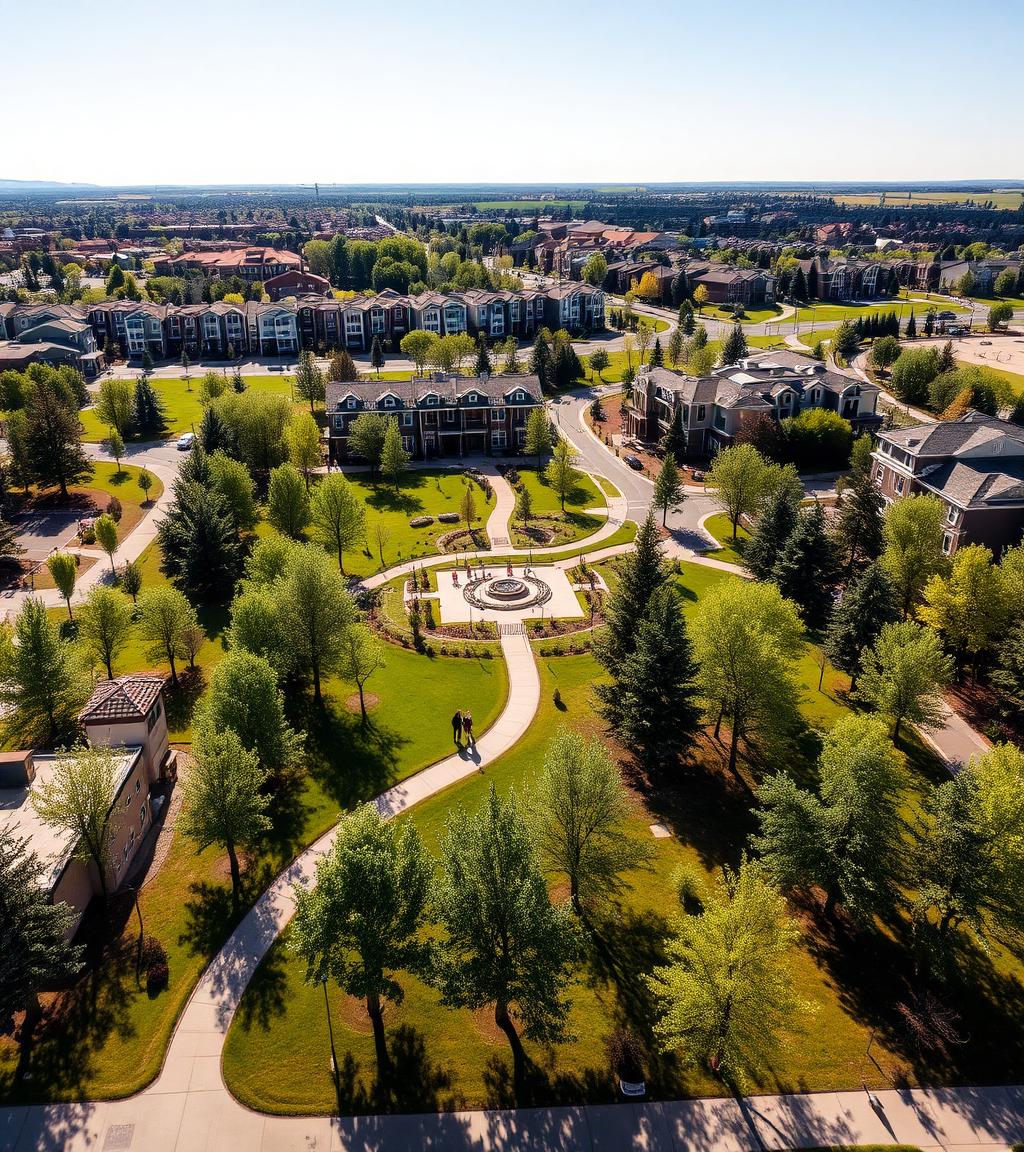
Central Park (formerly Stapleton) is a large master-planned community built on the site of the former Stapleton airport. It is organized around an extensive park and trail system, several town centers, and a clear set of design guidelines that give the neighborhood a consistent look.
Central Park offers a broad mix of housing, from condos and townhomes to detached homes across several distinct sub-areas. The parks, town centers, and newer housing stock are central to how the community is organized.
Homes & Housing Styles
The housing stock is primarily early-2000s through current construction. Styles range from traditional front-porch single-family homes to modern paired homes, row-style townhomes, and condo flats.
Earlier sections tend to have more traditional architecture, while areas such as Beeler Park and North End include more contemporary homes. Floor plans, basement finishes, yards, and lot sizes vary by builder and section.
Lifestyle, Parks & Local Amenities
Roughly a third of Central Park is dedicated parks and open space. The 80-acre Central Park anchors the neighborhood, with Westerly Creek, Bluff Lake Nature Center, and the F-15 Park scattered through other sub-areas.
The neighborhood is connected by a wide network of off-street paths used for walking, running, and commuting by bike.
Eastbridge Town Center and Stanley Marketplace handle everyday dining, coffee, and grocery, while Northfield adds large-format retail, theaters, and bigger restaurants. Each town center has a different scale and feel, which is worth experiencing in person.
Several community pools are located throughout the sub-areas.
Location & Everyday Convenience
I-70 and I-225 provide the main highway connections from Central Park. The Central Park station provides A Line service toward downtown and Denver International Airport, while the internal trail network connects many of the parks, residential areas, and town centers.
Advisory
What Sellers Should Know
Central Park is large enough that the closest comparable sales may come from the same sub-area and housing type rather than from the community as a whole. Builder, floor plan, lot, basement finish, and updates can all affect how buyers compare one home with another.
Presentation should make the home's layout, outdoor space, and proximity to nearby parks or town centers easy to understand.
Advisory
What Buyers Should Compare
Do not evaluate Central Park as one uniform neighborhood. Eastbridge, Conservatory Green, Wicker Park, Beeler Park, North End, Northfield, and the earlier sections differ in architecture, lot size, housing type, and location within the community.
Also review the applicable HOA or sub-association, metro district taxes, and any rental restrictions for the specific property. These costs and rules can differ depending on where the home is located.
Nearby Neighborhoods to Compare
If you are considering Central Park, these nearby areas are also worth comparing.
Begin a conversation
Let's Talk About Your Next Move
If you are thinking about buying or selling, we can start with a conversation about where things stand and what you are considering. There is no need to have everything figured out before reaching out.